How to get better at chess
Getting better at chess requires 30 to 45 minutes of daily practice split between tactical puzzles, 10- to 15-minute rapid games, and unassisted loss review.
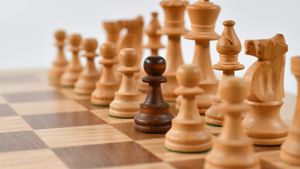
To get better at chess, practice 30 to 45 minutes a day focusing on tactical pattern recognition, longer rapid games, and reviewing your losses without a computer engine. Most players plateau because they play hundreds of fast blitz or bullet games without stopping to calculate or learn why they lost. Slowing down your clock and deliberately drilling tactical motifs eliminates the one- and two-move blunders that decide the vast majority of amateur games.
In cognitive studies on chess mastery, Dutch psychologist Adrian de Groot and researchers William Chase and Herbert Simon discovered that Grandmasters do not calculate dozens of moves further ahead than intermediate players. Instead, expert players view the board in structured clusters of four to five pieces. They instantly recognize recurring tactical patterns stored in memory. Building that mental library requires focused, deliberate practice rather than endless casual matches.
What should a daily chess practice routine look like?
A daily routine should balance tactical pattern drills, a single long game with an increment, and unassisted game analysis. Splitting your practice into distinct segments ensures you train calculation and critical thinking instead of mindlessly clicking pieces.
Here is how to structure a 30- or 45-minute daily chess session:
| Part | Focus | 30 minutes | 45 minutes |
|---|---|---|---|
| Tactics drills | Pattern recognition puzzles | 10 min | 15 min |
| Rapid game | 10|5 rapid game | 15 min | 20 min |
| Game review | Unassisted loss analysis | 5 min | 10 min |
Spend the first third of your session solving tactical puzzles. On platforms like Chess.com or Lichess, focus on puzzles matched to your current rating or slightly below it. In The Woodpecker Method, Grandmasters Axel Smith and Hans Tikkanen explain that repeating sets of fundamental tactical motifs trains your subconscious intuition. When basic forks, pins, and skewers become second nature, you spot them over the board in seconds without burning mental clock time.
Use the middle block to play a single game with a rapid time control, such as 10 minutes with a 5-second increment (10|5) or 15 minutes per side. An increment guarantees you always have enough time to calculate candidate moves in complex endgames instead of scrambling in time trouble. Reserve the final minutes to review your game while your decisions are still fresh in your memory.
How do you stop blundering and play "Real Chess"?
You stop blundering by pausing before every move to verify that your pieces remain safe. National Master Dan Heisman coined the term "Hope Chess" to describe how most club players lose games. In Hope Chess, you make a move focused entirely on your own attacking idea, hoping your opponent fails to notice the threat or leaves you alone.
Playing "Real Chess" requires calculating what your opponent can do in response before you commit your hand to the piece. To cut down on game-losing mistakes, run through Heisman's three-step blunder check before every move:
- Analyze what the opponent's move changed: Every move weakens a square, opens a line, or removes a defender from a key piece. Spotting that shift reveals what your opponent plans to attack next.
- Calculate checks, captures, and threats (CCTs): Examine your opponent's most forcing replies to your intended move. Assuming an opponent will defend passively is how players walk into forced mating nets and tactical pins.
- Verify piece safety across the board: Scan for undefended pieces before letting go of your piece. If your intended move pulls away a guard or leaves a bishop loose, confirm that your opponent cannot exploit it with a double attack.
Taking five seconds to verify defensive safety before every move prevents the careless blunders that drop whole pieces for free.
Why pattern recognition beats calculating deep moves
Pattern recognition beats deep calculation because your working memory can only calculate accurately once it recognizes the underlying board structure. While beginners often assume grandmasters calculate ten or fifteen moves ahead on every turn, cognitive research shows that master-level play depends far more on visual chunking than raw computational depth.
When an experienced player looks at a board, their visual cortex immediately groups pieces into familiar relationships: a fianchettoed bishop protecting a castled king, a pawn chain locking the center, or a rook cutting off an enemy king along an open file. Because their brain recognizes the underlying structure, it automatically filters out twenty legal but useless moves and highlights two or three promising candidate moves.
Drilling tactical themes (such as deflection, discovered checks, and back-rank mates) builds these mental chunks. When you practice basic tactical patterns repeatedly, your brain stops treating each piece as an isolated variable. You begin seeing tactical geometry instantly, freeing up your conscious calculation for genuine strategic choices.
How long does it take to get good at chess?
Reaching intermediate competence (around a 1000 to 1200 online rating) typically takes 50 to 150 hours of structured study and deliberate play. Advancing to a solid club rating of 1500 takes 300 to 600 hours, which places you in the top 15 to 20 percent of active online players.
Here is how chess milestones, study hours, and core learning hurdles compare across skill levels:
| Rating tier | Skill level | Estimated hours | Primary bottleneck |
|---|---|---|---|
| 1000 | Casual intermediate | 50–150 hours | One-move blunders |
| 1500 | Solid club player | 300–600 hours | Multi-move tactical vision |
| 2000 | Advanced expert | 1,500–3,000 hours | Deep calculation, strategy |
Reaching a 1000 rating requires basic opening development (controlling the center, developing knights and bishops, and castling early) and stopping immediate blunders. Progressing toward 1500 demands consistent tactical vision, simple pawn endgame technique, and learning to convert a material lead into a win.
Crossing a 2000 rating represents an advanced competitive milestone that demands thousands of hours of serious study. You can enter your daily practice hours into the 10,000 hours calculator to see your long-term progression timeline, or explore how the first 20 hours of focused practice build initial competence across new skills.
How do you track your chess practice?
You can use timespent to time your chess practice and balance your daily training between tactical drills, rapid games, and game review.
Setting up a dedicated Timed Activity for chess lets you log pure training hours whenever you sit down to study. Running the built-in Interval Timer keeps your practice balanced: you can set a 15-minute countdown block for focused tactics puzzles, followed by a 20-minute block for your daily rapid game. Because the live session timer displays directly on your Lock Screen and in the Dynamic Island, you stay aware of your study time without keeping distracting browser tabs open.
After each game analysis, add a quick Reflection to note key lessons from your losses, such as "missed a pin on f6" or "rushed move 22 in time trouble." Over weeks of play, timespent's Activity Trends and calendar heat map reveal your total training volume. Seeing your hours climb toward the 150-hour intermediate benchmark or the 500-hour club milestone keeps your daily study consistent.
Common questions
How long will it take to reach 1000 or 1500 rating at 30 to 60 minutes a day?
At 30 to 60 minutes of daily deliberate study, most beginners reach a 1000 rating in three to seven months and a 1500 rating in one to two and a half years:
| Daily practice | 1000 rating (100 hours) | 1500 rating (450 hours) |
|---|---|---|
| 30 minutes / day | ~7 months | ~2.5 years |
| 45 minutes / day | ~4.5 months | ~1.6 years |
| 60 minutes / day | ~3.3 months | ~1.2 years |
At 30 minutes a day, 0.5 hours × 7 days = 3.5 hours a week and 182.5 hours in a year. Progress depends on spending that time on deliberate training: players who split their time between puzzles and reviewed games progress far faster than those who only play casual blitz matches.
Why does playing speed chess hurt your rating?
Blitz and bullet games give you only a few seconds per move, which forces your brain to rely entirely on existing subconscious habits. You have no time to calculate candidate moves, evaluate pawn structures, or perform a blunder check. Playing dozens of rapid-fire bullet games reinforces shallow, impulsive moves and locks bad habits in place. To train your calculation and expand your tactical vision, play games with at least 10 to 15 minutes on your clock.
Should beginners spend time memorizing opening theory?
Beginners should learn opening principles rather than memorizing long move variations. Most amateur games deviate from master opening books by move four or five. Memorizing ten moves of the Sicilian Defense or King's Indian Defense yields very little benefit if your opponent plays an unusual sideline on move three. Focus on three universal rules: control the center squares with pawns, develop your knights and bishops toward the center, and castle early to safeguard your king.
How should you analyze your games without relying on the computer engine?
Analyze your games by reviewing each move by hand before looking at the computer evaluation bar. Turn off the engine and replay the game slowly. Pinpoint the exact move where the evaluation turned against you, write down what you were calculating during the game, and search for better alternatives on the board yourself. Once you have formed your own conclusions, turn on the engine to verify whether your tactical calculation was sound. Relying immediately on an engine creates a false sense of understanding because seeing a computer suggestion does not teach your brain how to find that move in your next match.