How to price crochet and handmade items
How to price crochet items fairly: calculate materials, choose your hourly wage, account for hands-on stitching time, and factor in marketplace fees.
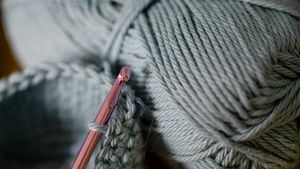
To price crochet items fairly without underpaying yourself, use the cost-plus labor formula: add your raw material expenses, business overhead, and active production hours multiplied by a fair hourly wage. If you sell through online marketplaces like Etsy or at local craft fairs, adjust that total for transaction fees and profit margin so platform cuts do not eat into your wages.
Most makers start selling because friends and family admire their work. But when hobbyists turn into sellers, they often price by gut feeling or copy cheap listings they see online. That approach often leads to working for pennies an hour, spending twenty hours on a blanket only to take home twelve dollars in labor. Pricing accurately requires counting your true material costs and recording the actual hours you spend with a hook.
Why the materials times three rule fails
A common piece of advice shared in craft groups is the "materials times three" rule: take what you spent on yarn and multiply it by three. While this shortcut seems convenient, it completely disconnects your selling price from the physical time required to create the piece.
Yarn cost does not scale with labor. A quick cotton dishcloth might use $1.50 worth of yarn and take 25 minutes to complete. Multiplying materials by three gives a price of $4.50, leaving $3.00 for labor—or a respectable $7.20 per hour of stitching. In contrast, an intricate baby blanket made from $15 of affordable acrylic yarn might require 22 hours of continuous single and double crochet stitches. Multiplying materials by three sets the price at $45, leaving you with an effective wage of just $1.36 per hour.
Handmade crochet cannot be replicated by commercial machines. Unlike knitting, which industrial knitting looms produce by the millions, every single crochet stitch must be formed by hand with a single hook. Applying a blanket material multiplier penalizes you for working with affordable yarn on intricate, high-labor designs.
The standard handmade pricing formula
To earn a legitimate wage, professional craft business consultants and the American Crochet Association recommend building your pricing on a four-part cost-plus model:
Retail price = materials + (production hours × hourly wage) + overhead
Each variable in this formula represents a real cash or labor expense:
- Materials cost: The exact supplies consumed by the finished project. If you buy a 200-gram skein for $8 and use 150 grams, your project cost is $6. This also covers notions and packaging, such as safety eyes, polyfill stuffing, wooden buttons, care tags, and shipping boxes.
- Production hours: The pure hands-on time required to make the piece from the foundation chain to the final finish. This includes blocking, assembling pieces, and weaving in ends.
- Hourly wage: The rate you pay yourself for skilled artisan labor. Beginning sellers often set this around $12 to $15 per hour, while experienced pattern makers and fast production crocheters charge $20 to $30 or more.
- Overhead allowance: Indirect operating costs required to keep your business running. This covers crochet hook wear, ergonomic grips, pattern purchases, market booth fees, and photography lighting. Solo makers typically add a flat $2 to $5 per item to cover these background expenses.
How to adjust for wholesale, retail, and marketplace fees
If you sell directly through third-party platforms like Etsy, Shopify, or local consignment boutiques, the standard cost-plus formula leaves out two critical deductions: business profit margin and platform transaction fees.
Craft educator Pamela Grice of Crochetpreneur emphasizes that your labor wage belongs to you as an employee, while profit margin belongs to your business for reinvestment and growth. Under this model:
- Base production cost: Materials + overhead + (hours × hourly wage). This is your absolute break-even threshold.
- Wholesale price: Multiply base cost by 1.2 to 1.5 (a 20% to 50% profit margin) when selling in bulk to boutiques or stockists.
- Direct retail price: Multiply base cost by 2.0 to 2.5 for direct sales at craft fairs or your own shop, leaving room for promotions and business growth.
- Marketplace fee adjustment: Divide your target price by
(1 - fee percentage)when listing on third-party platforms.
Dividing by (1 - fee percentage) is an essential mathematical step. If you sell on Etsy, listing fees, transaction cuts, and payment processing fees take roughly 10% of the customer's total payment. If you simply calculate a $100 price and tack on $10, a 10% fee on the new $110 total subtracts $11, quietly carving into your labor wage. Dividing your $100 baseline by 0.90 yields a list price of $111.11, ensuring the fee is covered entirely by the buyer.
Realistic pricing benchmarks for common items
Pricing varies depending on yarn fiber and pattern complexity, but seeing real-world numbers helps anchor your expectations. Larger wearable projects and detailed toys also require significant time buffers for assembly, seaming, and blocking.
Here is how standard craft pricing breaks down for typical crochet projects using an artisan baseline wage of $15 per hour plus standard materials and overhead:
| Project type | Active hours | Material cost | Retail price |
|---|---|---|---|
| Basic beanie | 2–3 hours | $5–$8 | $40–$60 |
| Medium amigurumi | 4–6 hours | $6–$12 | $75–$115 |
| Baby blanket | 12–20 hours | $25–$45 | $220–$370 |
| Adult cardigan | 30–50 hours | $55–$110 | $540–$920 |
Seeing a $300 baby blanket or an $800 cardigan can trigger sticker shock for makers accustomed to mass-retail department stores. However, handmade garments and heirloom textiles compete in the artisan gift market, not against bargain factory imports. If a customer wants a bespoke handmade piece made from natural fibers, they are paying for personalized craftsmanship and dozens of hours of focused handwork.
Why untracked hours ruin your profit margin
The single most common mistake handmade sellers make is estimating their hours after finishing a project. Human memory is notoriously poor at recalling fractured blocks of creative time.
When asked how long a completed shawl took to make, most crafters guess between six and eight hours because they remember two or three relaxed weekend afternoons on the couch. But when those same makers turn on an active timer during every stitching session, the actual count routinely clocks in at 15 to 18 hours.
Underestimating your production time by half cuts your take-home pay by half. If you price a custom throw assuming 10 hours of work at $15 per hour ($150 labor), but the piece actually takes 22 hours of hands-on crocheting, your actual wage collapses to $6.81 per hour. Accurate timing protects your income. Without an exact count of your production hours, even the best pricing formula leaves you working below minimum wage.
How do you track your craft hours?
To price your finished pieces accurately without guessing your hours, track every project session in timespent using a dedicated Timed Activity.
Setting up an Activity for each ongoing project, such as "Sunflower Tote Bag" or "Chunky Raglan Sweater," lets you record pure stitching time whenever you sit down with your yarn. Starting your session timer directly from your Lock Screen or Dynamic Island keeps your count accurate. Because you can pause the timer whenever you step away to wind a fresh skein, inspect your gauge, or rest your wrists, your log captures pure stitching labor rather than loose elapsed couch time.
If your project involves repetitive modular components like granny squares or amigurumi limbs, pair your timer with a Simple Tally to count finished pieces as you complete them. Over the life of the project, timespent's Activity Trends and bar charts compile your cumulative hours and daily output into an exact historical audit. Having documented time data gives you complete confidence when quoting custom commissions, defending your prices to wholesale clients, and calculating your real hourly earnings down to the penny.
Common questions
How much should a beginner crocheter charge per hour?
Beginner makers should set their labor rate between $12 and $15 per hour, reflecting their local minimum wage. While you might feel hesitant to charge for your labor early on, your time has inherent value. If you charge zero labor and only cover materials, you are donating your physical work and reinforcing unrealistic price expectations across the maker community.
How do you price an item if you are a slow crocheter?
If you are still building your speed, base your price on a standard production time rather than passing your learning curve on to the customer. You can gauge your current pace by timing a 100-stitch swatch. Most intermediate crocheters work between 25 and 35 stitches per minute on basic stitches like single or double crochet. If a pattern takes an experienced maker 4 hours but takes you 8 hours because you stop to count rows or frog mistakes, bill for 4 to 5 hours of labor. You can still log your total hours in your tracker to watch your speed improve with each completed project.
How do you handle customers who say your price is too high?
Most experienced sellers avoid discounting their work when a shopper compares a handmade quote to a mass-produced item. Commercial stores sell machine-knitted items made overseas in bulk, whereas true crochet cannot be mechanized and must be made stitch by stitch by hand. Explaining that the price reflects durable natural fibers and dozens of hours of manual labor helps customers understand the difference between artisan goods and factory products. Shoppers looking for heirloom craftsmanship will pay fair value once they understand the labor involved.
How long does a project take at 30 minutes to 2 hours a day?
A small accessory takes under two weeks of casual evenings, while an adult garment or large blanket can span several months. Here is how active project hours translate into calendar turnaround times at common daily paces:
| Active hours | 30 min / day | 1 hour / day | 2 hours / day |
|---|---|---|---|
| 5 hours (beanie / scarf) | 10 days | 5 days | 2.5 days |
| 15 hours (baby blanket) | 30 days | 15 days | 7.5 days |
| 35 hours (adult sweater) | 70 days | 35 days | 17.5 days |
| 60 hours (queen blanket) | 120 days | 60 days | 30 days |
To project completion dates for larger heirloom projects or custom order deadlines, you can test different stitching intervals in our 10,000 hours calculator.