Grease the groove: pull-ups & push-ups method
Grease the groove builds strength by doing 40% to 50% of your max reps across 5 to 8 sets a day, spaced 15+ minutes apart with zero failure.

Grease the groove (GtG) is a neurological strength method where you perform 40% to 50% of your single-set maximum reps across 5 to 8 mini-sets a day, spaced at least 15 to 60 minutes apart, for 5 to 6 days a week without ever training to muscular failure. Running a focused 14- to 28-day cycle on one or two bodyweight movements—most commonly pull-ups or push-ups—typically increases your single-set max reps by 30% to 50%+ without leaving you sore or exhausted.
Coined by former Soviet Special Forces instructor and strength coach Pavel Tsatsouline in Power to the People! and The Naked Warrior, the method flips conventional gym programming on its head. Instead of tearing down muscle fibers once or twice a week until your arms shake, you treat strength as a fine motor skill—practicing crisp, effortless reps throughout the day so your central nervous system learns to fire more muscle fibers at once.
How grease the groove compares to traditional sets
Because traditional workouts and 30-day max-out challenges push each set close to exhaustion, they trigger metabolic fatigue that limits how often you can practice cleanly. Grease the groove trades per-set exhaustion for high daily frequency.
Here is how the three approaches compare across a training week:
| Method | Effort / set | Rest interval | Failure rule | Primary adaptation |
|---|---|---|---|---|
| Grease the groove | 40%–50% max | 15–60+ min | Never near failure | Synaptic efficiency |
| Hypertrophy sets | 80%–95% max | 1.5–3 min | 0–2 reps in reserve | Muscle fiber size |
| Daily max challenges | 100% max | 24 hours | Every set to failure | Grinding & soreness |
The math shows why grease the groove builds strength so quickly on stubborn bodyweight movements. As physical therapist Daniel Vadnal demonstrates in his FitnessFAQs 30-day pull-up guide, suppose your strict pull-up max is 6 reps:
- Traditional workout (3 days a week): If you perform 3 exhausting sets of 5 reps on Monday, Wednesday, and Friday, you complete 15 reps per workout × 3 days = 45 fatigued reps per week, with your form breaking down on the final reps of every set.
- Grease the groove (6 days a week): If you cut each set in half to 3 crisp reps (50% of your max) and do a quick set 6 times a day whenever you walk past a doorway pull-up bar, you complete 18 reps per day × 6 days = 108 pristine reps per week.
You accumulate more than double the weekly pulling volume without delayed-onset muscle soreness (DOMS), because no single set ever depletes your local energy stores or strains your form.
Why synaptic facilitation builds strength without soreness
In the first 2 to 4 weeks of a strength program, nearly all of your strength gains come from your central nervous system wiring cleaner signals to your muscles rather than your muscles growing physically larger. Grease the groove isolates and accelerates this neurological phase.
In a foundational 1988 review in Medicine & Science in Sports & Exercise and a 2007 review in Sports Medicine, neuromuscular researchers Digby Sale, Jonathan Folland, and Alun Williams documented that early strength increases are driven by three neural adaptations:
- Motor unit recruitment: An untrained nervous system cannot voluntarily switch on all of its highest-threshold, fast-twitch muscle fibers at once. Repeated sub-maximal practice lowers the activation threshold so your brain recruits more muscle fibers on every pull or push.
- Rate coding (firing frequency): Your spinal motor neurons learn to fire electrical impulses at higher frequencies, generating significantly more tension from the exact same amount of muscle tissue.
- Intermuscular coordination and disinhibition: As Carroll, Riek, and Carson (2001) showed in Sports Medicine, strength training operates like motor skill learning along the corticospinal tract. Every clean repetition strengthens the synaptic pathway (synaptic facilitation) while teaching antagonist muscles to relax and protective Golgi tendon organs to stop braking your force output early.
Tsatsouline summarizes this neurobiology as Specificity + Frequent Practice = Success—provided you never train to failure. When you grind through a shaky final pull-up with your chin jutting forward and your elbows flaring, you are rehearsing a clumsy motor pattern under central nervous system fatigue. Stopping while the movement still feels crisp and fast ensures that every single repetition grooves an efficient neural pathway.
Just as short, daily balance sessions calibrate your finger reflexes when learning a freestanding handstand, spreading sub-maximal strength sets across the day gives your nervous system 30 to 45 clean practice exposures a week instead of two or three.
The 4 rules of grease the groove
To run grease the groove without burning out your joints or stalling after ten days, every set has to follow four strict rules:
- Stay at 40% to 50% of your max (up to 60% for high-rep push-ups): Test your strict, single-set maximum before day one, then cut that number in half. If you can do 8 strict pull-ups, your working set is 4 reps. If you can do 30 push-ups, your working set is 12 to 15 reps. Every set should finish feeling like a warm-up.
- Wait at least 15 to 60 minutes between sets: Your muscles power a 10-second set of pull-ups or push-ups using stored phosphocreatine (ATP-CP) and fresh central motor drive. Waiting at least 15 to 30 minutes—or simply spacing sets 1 to 2 hours apart across your workday—lets your ATP-CP stores and nervous system return to 100% freshness before your next set.
- Make every rep textbook strict: Because you are only doing half of your max, there is no excuse for kipping, half-reps, or bouncing out of the bottom. Start every pull-up from a full dead hang with your shoulders pulled down away from your ears, and lock your elbows out at the top of every push-up with your core braced.
- Pick only 1 or 2 exercises per cycle: As Overcoming Gravity author Steven Low notes on high-frequency training, ultra-frequent practice works because your recovery is channeled into one specific movement groove. Pick one pulling move (like pull-ups or chin-ups) or pair it with one pushing move (like push-ups or dips), and drop all other gym volume for those muscle groups during the cycle.
How to run a 28-day cycle for pull-ups & push-ups
A 28-day (4-week) cycle is the sweet spot for grease the groove: long enough to lock in motor unit recruitment and double your weekly volume, but short enough to avoid overuse strain in your elbows and shoulders.
Here is how to structure your working sets and daily totals across the four weeks based on your starting max:
| Starting max | GtG set (40%–50%) | Daily total (6 sets) | Weekly volume (6 days) |
|---|---|---|---|
| 1–2 pull-ups | 1 strict or 2 negatives | 6–12 reps / day | 36–72 reps / wk |
| 6 pull-ups | 3 reps / set | 18 reps / day | 108 reps / wk |
| 10 pull-ups | 4–5 reps / set | 24–30 reps / day | 144–180 reps / wk |
| 25 push-ups | 10–12 reps / set | 60–72 reps / day | 360–432 reps / wk |
Day 1: Test your strict baseline max
After a 5-minute warm-up of arm circles, scapular pulls, and a few easy warm-up reps, perform one all-out set of strict pull-ups or push-ups. Stop the count the moment your range of motion shortens or your tempo grinds to a halt. Rest for the remainder of the day, and multiply that number by 0.4 to 0.5 to set your working reps.
Days 2 to 14: Groove the baseline set (Weeks 1–2)
Perform 5 to 8 sets per day, 5 to 6 days a week, keeping your rep count fixed at your 40%–50% number. Anchor your sets to everyday triggers so you never have to think about scheduling a workout:
- Doorway bar trigger: Hang a pull-up bar in your home office or kitchen doorway and do one set every time you walk through to grab water or coffee.
- Work-block trigger: Drop for a set of push-ups (and a 60-second deep squat hold to open your hips) at the end of every 60- to 90-minute desk block, or follow the daily habit cue structure calisthenics coach Tom Merrick outlines in his Bodyweight Warrior minimalist daily workout.
Take at least 1 to 2 full rest days each week (such as Sunday, or Wednesday and Sunday) where you do zero sets.
Days 15 to 25: Add 1 rep or 1 set (Weeks 3–4)
By the start of week 3, your original 40%–50% set will feel noticeably lighter and faster. Increase your daily volume slightly for the final ten working days by adding 1 rep per set (for example, moving from 3 pull-ups per set to 4 pull-ups per set) or adding 1 extra set per day. Do not retest your max mid-cycle; testing a 100% max set creates central fatigue that ruins the next two days of practice.
Days 26 to 28: Taper for 2 days and retest
Take two complete rest days on days 26 and 27 so any residual fatigue in your forearms, lats, or chest clears completely. On day 28, warm up thoroughly and test your new single-set strict maximum.
How to avoid elbow tendinitis (golfer's elbow)
The biggest risk during a grease the groove pull-up cycle is medial epicondylitis (golfer's elbow)—an aching irritation on the inner knob of your elbow caused by gripping a bar 6 times a day before your forearm tendons have adapted.
In his breakdown on why you shouldn't grease the groove year-round, physical therapist Daniel Vadnal (FitnessFAQs) explains the tissue mismatch: your nervous system and muscle bellies adapt to daily sub-maximal sets within days, whereas tendons have poor blood supply and remodel over months. Keep your elbows and shoulders pain-free with three safeguards:
- Cap cycles at 2 to 4 weeks: Treat grease the groove as a 14- to 28-day peaking block, then return to normal 2- to 3-day-a-week strength training for at least a month so your connective tissue catches up.
- Use gymnastics rings or a neutral grip if straight bars ache: A fixed pronated pull-up bar locks your forearms into internal rotation under load. Hanging gymnastics rings from your pull-up bar—or using neutral-grip (palms facing each other) handles—lets your wrists and elbows rotate naturally as you pull.
- Scale back immediately if your joints feel stiff: If the inside of your elbow feels tender when you squeeze the bar, drop down to 4 sets a day at 35% to 40% of your max and take two consecutive rest days.
How to track your grease the groove sets
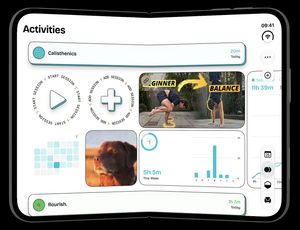
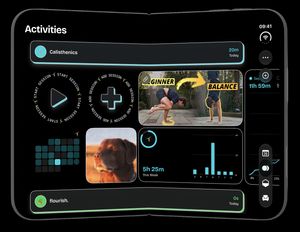
You can use timespent to log every sub-maximal set across the day with a single tap, watch your daily and weekly rep totals climb, and keep your favorite form tutorials pinned right inside your tracker.
Create a Measured Tally (or Simple Tally) Activity for your pull-ups or push-ups and set a daily Do More goal—such as 18 pull-ups or 60 push-ups per day across six mini-sets. Whenever you finish a set under the doorway bar or beside your desk, log your reps from the Lock Screen widget or inside the app, and timespent automatically totals your daily volume, weekly bar chart, and monthly Moments milestones. You can also place a Link widget on your Activity page to pin a reference video like FitnessFAQs' 30-day Grease the Groove guide right next to your calendar heat map so your form cues stay one tap away.
Common questions
How many reps do you accumulate at 4 to 8 sets a day?
Spreading 4 to 8 sub-maximal sets across the day six days a week builds massive 28-day repetition volume without ever crossing the fatigue threshold:
| Schedule (5-rep set) | Daily reps | Weekly reps (6 days) | 28-day cycle total |
|---|---|---|---|
| 4 sets / day | 20 reps / day | 120 reps / wk | 480 clean reps |
| 6 sets / day | 30 reps / day | 180 reps / wk | 720 clean reps |
| 8 sets / day | 40 reps / day | 240 reps / wk | 960 clean reps |
At 6 sets of 5 reps a day across 6 days a week, 30 reps × 24 training days = 720 strict repetitions in 28 days—more than triple the ~216 reps you would log doing 3 sets of 6 reps three times a week in a conventional gym split.
Does grease the groove build muscle (hypertrophy)?
Grease the groove is designed primarily for neurological strength and max-rep endurance, though beginners and intermediate lifters often see modest muscle growth from the sheer jump in weekly volume. Hypertrophy is maximized when muscle fibers experience high mechanical tension close to muscular failure (typically within 0 to 3 reps of failure), which recruits and fatigues every available motor unit in a single set. Because grease the groove stops every set halfway to failure, it builds dense neural drive and work capacity first; once your 28-day GtG cycle boosts your pull-up max from 5 reps to 10 reps, you can switch back to traditional 3×8 hypertrophy sets and build muscle much faster with your newly unlocked strength.
Can you grease the groove with 0 or 1 pull-up?
Yes—if you cannot do at least 2 strict pull-ups yet, grease the groove works with slow eccentric (negative) pull-ups, band-assisted pull-ups, or incline bodyweight rows. For eccentric pull-ups, step onto a chair or box so your chin starts above the bar, hold the top position for 1 second, and lower yourself to a dead hang over a slow 5-second count. Performing 2 to 3 crisp five-second negatives across 5 sets a day (10 to 15 negatives daily) builds the exact motor unit recruitment needed to unlock your first strict pull-up within 2 to 4 weeks.
Which calisthenics skills work best with grease the groove?
Grease the groove works best on bodyweight movements you can start in seconds without a long warm-up, including pull-ups, chin-ups, push-ups, parallel bar dips, pistol squats, and short isometric holds like the L-sit or tuck front lever (held for 40% to 50% of your max hold time). Avoid using grease the groove for heavy barbell deadlifts, max-effort plyometrics, or high-torque straight-arm skills like the full back lever or planche, which require 10 to 15 minutes of dedicated joint preparation before every session.